
The Dragon Hole’s secret: scientists discover a vast underwater sinkhole filled with 1,700 unusual viruses
Scientists exploring the Dragon Hole, a massive sinkhole in the South China Sea, have uncovered nearly 1,700 unusual viruses thriving in its depths.
 Seema Gupta
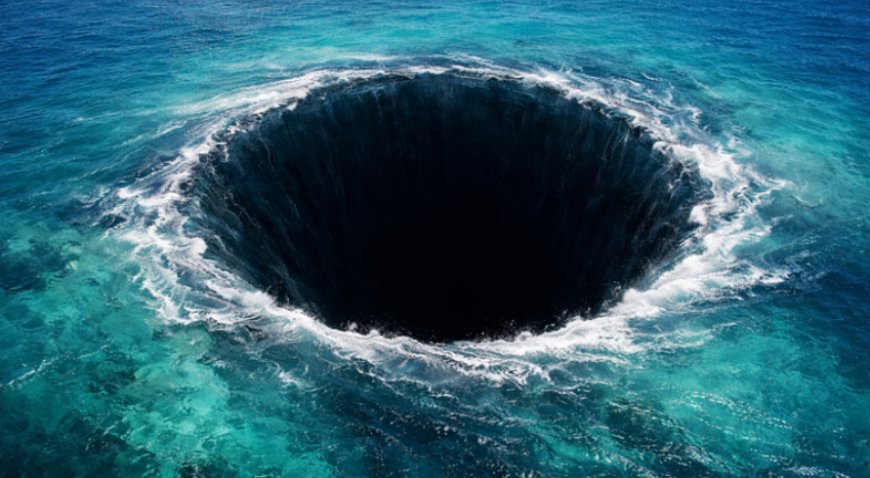
In the heart of the South China Sea lies a place straight out of legend: the “Dragon Hole.” This enormous sinkhole plunges nearly 1,000 feet into pitch-black waters where oxygen is scarce and most sea creatures can’t survive. Yet when scientists from Chinese marine institutes, including the First Institute of Oceanography, ventured inside, they didn’t find emptiness — they found life. Hidden in its layered depths are bustling microbial communities and, even more astonishing, traces of nearly 1,700 different viruses revealed through DNA sequencing. Many of these viruses are so unusual they don’t even appear in existing scientific databases. For researchers, the Dragon Hole isn’t just a geological wonder — it’s a secret laboratory of nature, offering rare clues about how life adapts and thrives in Earth’s most extreme, hidden corners.
What exactly is the Dragon Hole, and in which part of the world is it located?
The Dragon Hole, known formally as the Sansha Yongle Blue Hole, is like a hidden doorway into the deep sea. It’s a gigantic sinkhole tucked away in the South China Sea, plunging straight down with sheer walls that make it feel almost otherworldly. Blue holes like this were carved out of limestone long ago, and when the oceans rose, they filled with water—transforming into mysterious vertical caverns beneath the waves. Today, the Dragon Hole stands as one of the ocean’s most awe‑inspiring secrets, a place where geology and legend meet.
The Dragon Hole first captured global attention in the mid‑2010s, sparking curiosity far beyond the scientific community. Since then, researchers have mapped and studied it in depth, uncovering a world that looks and feels nothing like the surrounding ocean. What seemed at first like just another deep cavity has revealed itself as a unique, hidden environment with mysteries all its own.
What causes the Dragon Hole to remain cut off, as if it’s a world unto itself?
In the open ocean, water is always on the move—stirred by currents, winds, and shifting temperatures. But the Dragon Hole plays by different rules. Its towering walls and narrow mouth act like a gate, keeping the deeper waters cut off from the surface. Instead of mixing freely, the layers inside remain sealed away, creating a hidden, self‑contained world beneath the waves.
Inside the Dragon Hole, the water settles into layers, almost like hidden floors in a secret tower. Each “zone” has its own chemistry, creating a staircase of strange environments stacked one on top of the other. Because oxygen stops flowing down into the depths, the lower waters become sealed off, turning into a trapped world where unusual microbes can linger and survive for ages—like ancient guardians of a forgotten realm.
Near the surface of the Dragon Hole, the water feels familiar—like any other stretch of ocean. But as you sink deeper, oxygen fades away until it’s gone completely. Down here, the usual cast of ocean life—fish, plants, and other creatures—cannot survive, leaving the depths looking hauntingly empty. Yet the silence hides a surprise. In place of fish and coral, there’s a thriving community of tiny microorganisms, perfectly adapted to live without oxygen or sunlight. What seems lifeless at first glance is, in fact, a hidden world buzzing with unseen life.
In the dark depths, microbes reign without sunlight
In places as extreme as the Dragon Hole, life finds a way to endure without sunlight. Instead of photosynthesis, microbes here rely on chemistry, fueling themselves through reactions with sulphur and other compounds dissolved in the deep waters. Scientists have uncovered entire communities of bacteria that draw energy from these hidden chemical sources, proving that survival can take many unexpected forms.
What’s even more fascinating is how these microbes are fine‑tuned to their environment. Different groups dominate at different depths, depending on which chemicals are available. In some layers, sulphur‑based metabolism seems to power much of the ecosystem, turning the Dragon Hole into a layered world where invisible life rules in the shadows.
The jaw‑dropping find: close to 1,700 distinct viruses revealed by genetic sequencing.
The discovery that grabbed headlines was the sheer scale of viral diversity inside the Dragon Hole. Genetic analysis of water samples revealed nearly 1,700 distinct viral types lurking in its depths. Many of these are bacteriophages—viruses that specifically target bacteria—hinting at a hidden, complex web of interactions shaping this mysterious ecosystem.
In most ecosystems, viruses quietly shape the balance of microbial life—and inside the Dragon Hole, their influence may be even greater. Researchers have found that the mix of viruses changes as you go deeper. The oxygen‑free layers at the bottom seem to host a very different viral community compared to the upper waters, hinting at a hidden world where viruses help drive the rhythm of life in the dark.
Why a large number of these viruses defy current classification?
One of the biggest reasons this discovery is turning heads is that many of the viral sequences found in the Dragon Hole don’t neatly fit into any known categories. Scientists can’t confidently match them to established virus groups, which makes them stand out.
That doesn’t mean these viruses are automatically dangerous or brand‑new—it simply shows how little we’ve studied them. They’re either poorly understood or missing from current reference databases, a reminder of just how much viral diversity in extreme marine environments remains hidden from science.
How exactly do viruses function in such an environment?
Viruses aren’t simply silent tag‑alongs in ecosystems. In microbial worlds, they actively shape life by:
- infecting and destroying their hosts, viruses act like natural regulators.
- pass genes between organisms, sparking new traits and adaptations.
- breaking open cells, they release organic matter back into the environment, fueling nutrient cycles.
In the oxygen‑free depths of a sinkhole, viruses aren’t just bystanders—they help decide the fate of life. Their interactions can shape which microbes manage to survive and influence the chemical rhythms that unfold in the dark over time.
Why the impact of this discovery extends beyond one ocean region?
The Dragon Hole isn’t just a scientific oddity—it’s a living laboratory. It gives researchers a rare chance to study how life adapts under some of the harshest conditions on Earth, with insights that reach far beyond this single site.
- Gaining clues about how life first began on Earth
- Deepening our knowledge of oxygen‑free zones in the ocean
- Watching how microbial communities adapt to shifts in ocean chemistry
- Imagining what forms of life might survive in similar extreme environments beyond our planet
Since it’s nearly impossible to recreate such extreme conditions in a lab, places like the Dragon Hole become priceless natural laboratories. They offer scientists a rare glimpse into hidden ecosystems, letting us study life exactly as it unfolds in the wild.
What’s the next chapter in Dragon Hole research?
Finding such a vast range of viruses opens up big new questions. Scientists now want to uncover which microbes these viruses target, how their activity changes from one layer of the sinkhole to another, and what all of this means for the long‑term balance and stability of the ecosystem.
The further scientists venture into the Dragon Hole, the more it reveals hidden biological worlds that defy our expectations of what life should be.